Landlords often ask whether a Cat A ceiling will survive the next tenant’s Cat B works. The answer depends less on the brand of tile and more on how the grid, lighting strategy, and perimeter details were set out.
What Cat A usually means for ceilings
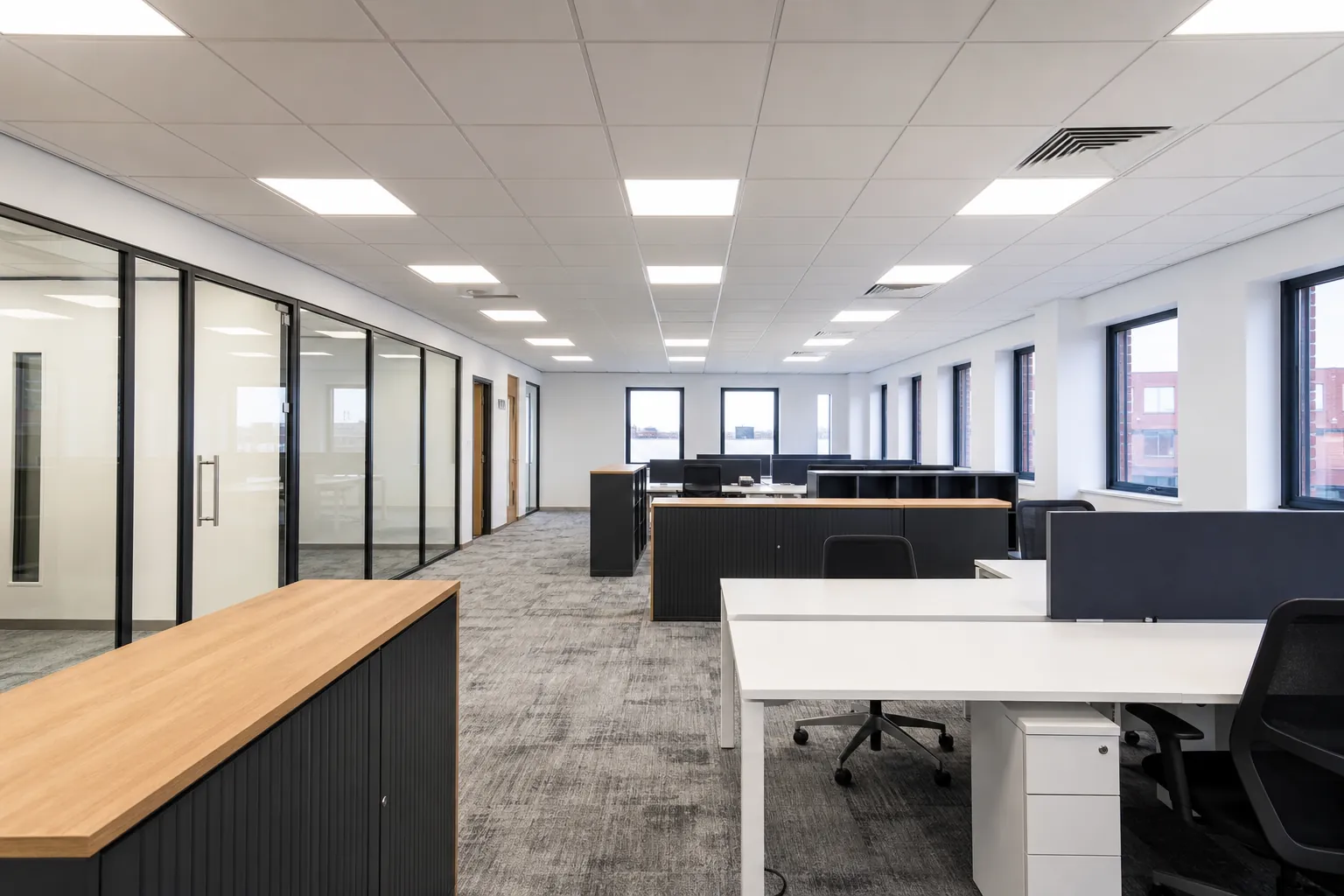
A typical Cat A floorplate uses a continuous suspended ceiling — often mineral fibre on a 600 mm grid — with a generic lighting layout. It presents well for marketing and gives incoming tenants a usable baseline. It is not always the final ceiling the tenant will keep.
Where Cat B changes the ceiling
Cellular offices, meeting rooms, tea points and branded reception zones often need grid alterations, MF bulkheads, or higher-spec acoustic tiles. If the Cat A install was poorly detailed, those changes create crooked lines and wasted material.
Specify for reuse, not just handover photos
- Use a quality grid that can be reworked without collapsing
- Keep attic stock labelled by batch and floor
- Avoid proprietary clip systems unless the next fit-out is known
- Detail perimeter trims so partitions can abut cleanly later
How Erimus helps landlords
We install Cat A ceilings that are tidy enough to market and practical enough to adapt. On Cat B programmes we alter grids carefully rather than ripping out whole floors by default.
Planning a Cat A or Cat B package in Leeds, Newcastle or Teesside? Book a free survey — suspended ceilings are our lead trade.